CODEHANCEBlog
Browse allAbout

Category

Using AI

Use AI thoughtfully in the work you already do—from asking better questions to checking what comes back.

7 posts in this category

AllUsing AIWorking with AIBuilding AIFounder Notes
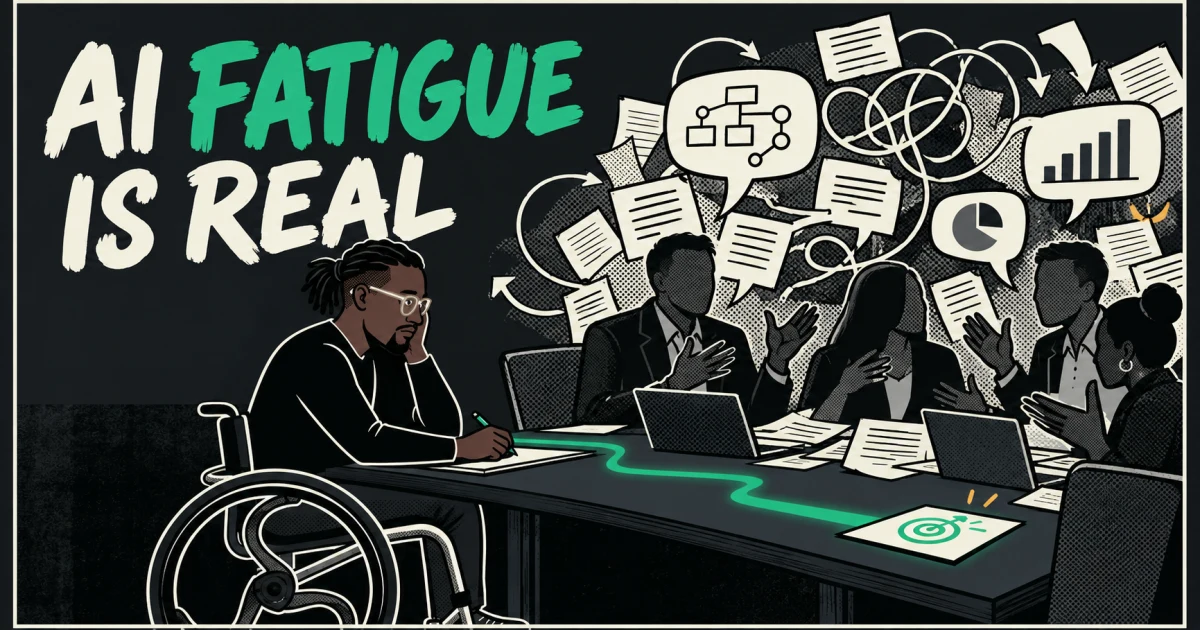
Four delivery professionals in a meeting turning a cloud of abstract AI symbols into one clear shared workflow
Using AI·22 September 2026

AI Fatigue Is Real and Workplace Jargon Is Making It Worse

I keep hearing the same reaction around AI-heavy meetings: people leave tired, confused and unsure what was decided. The problem is not simply new terminology. It is what happens when teams discuss an AI solution before agreeing on the business problem.

By Kingsley Ijomah
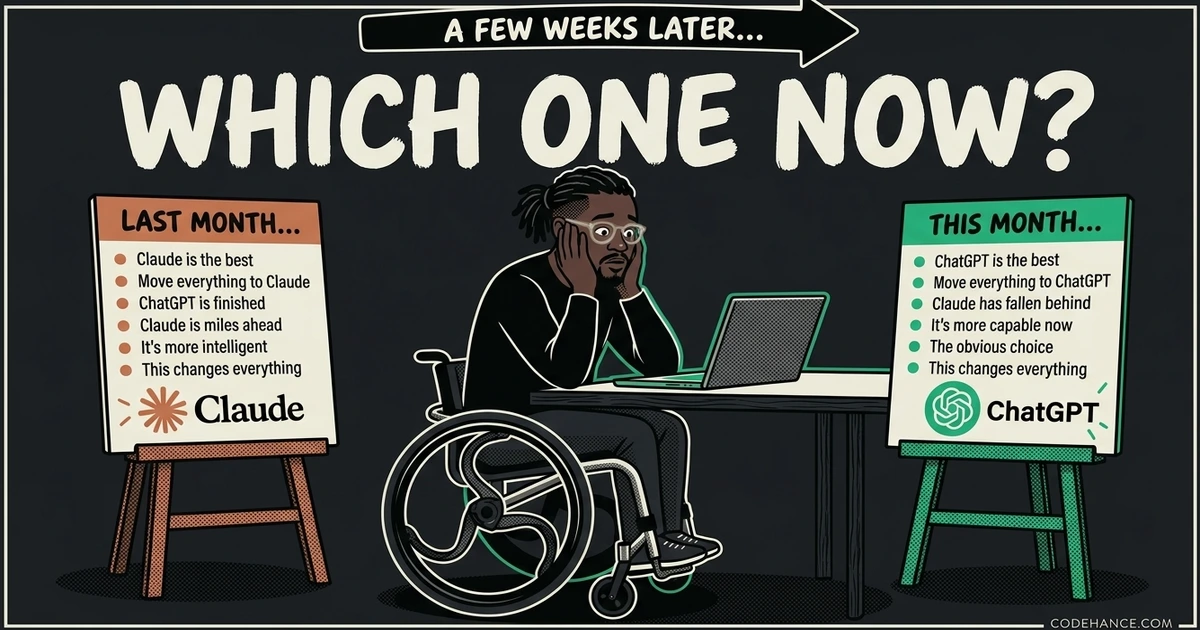
Modern tech editorial screenprint illustration with bold hand-lettered headline "WHICH ONE NOW?". The author, a Black male   software engineer with glasses and tied-back dreadlocks in an active sports wheelchair with Loopwheels, clutches his face in   humorous overwhelm between two architectural easels tracking the flip-flop between Claude and ChatGPT benchmark hype.
Using AI·12 September 2026

Your AI Workflow Should Be Model-Agnostic from Day One

I watched the confident advice swing from Claude to ChatGPT within weeks. It made me realise that the durable part of an AI workflow should be the context, process and checks you own, not whichever model happens to lead today.

By Kingsley Ijomah

Cross-functional delivery specialists gathered around a shared workflow while AI-assisted knowledge moves between stages
Using AI·8 September 2026

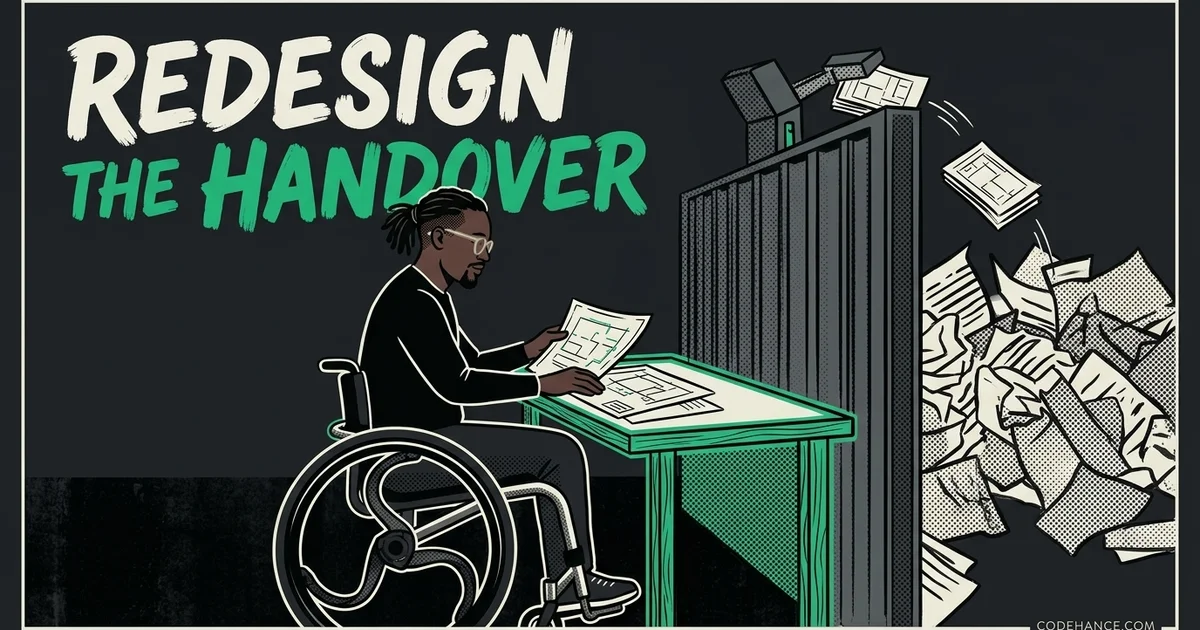
AI Won’t Fix Agile Until You Redesign the Handover

AI can make every role faster while making delivery worse. The real opportunity is to turn specialist knowledge into reusable skills, redesign handovers and organise adoption around customer value.

By Kingsley Ijomah

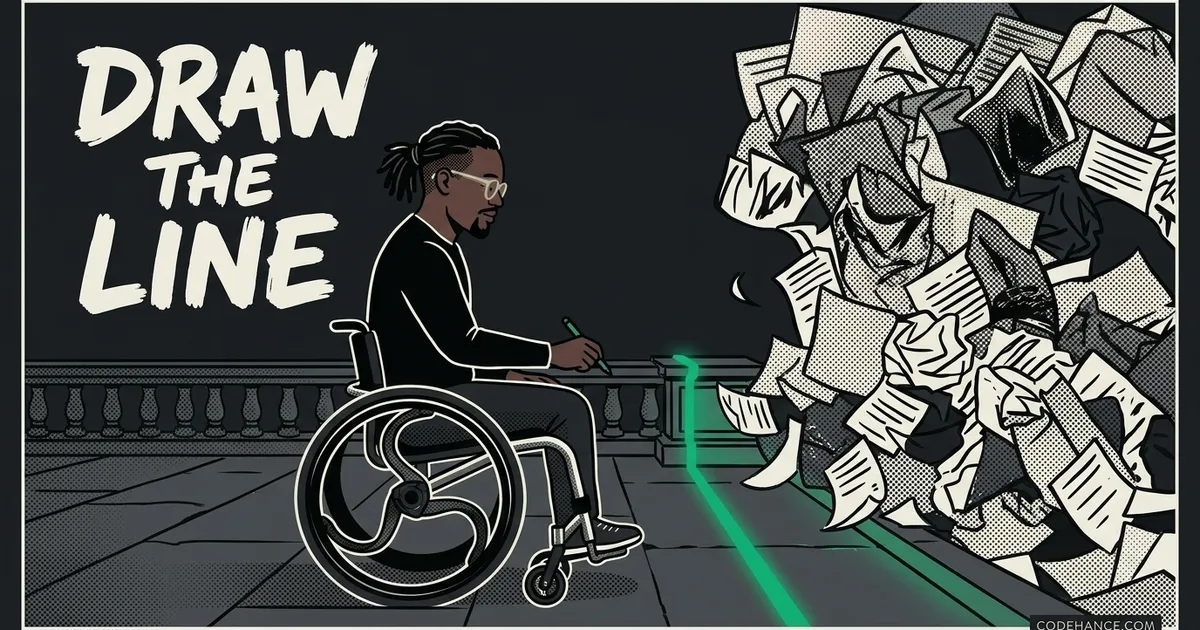
Modern dark-mode editorial screenprint illustration in deep zinc, off-white, and emerald green with   halftone textures and an editorial keyline border. In the upper left, bold hand-lettered text reads   'DRAW THE LINE'. A Black male software engineer with glasses and tied-back dreadlocks sits in an   active sports wheelchair with an ultra-low backrest and carbon Loopwheels on a stone terrace. With   marker in hand, he stands guard behind a glowing emerald green boundary line that stops an avalanche   of chaotic loose paperwork in its tracks, symbolizing deliberate boundaries, governance, and   accountability in AI adoption. A subtle 'CODEHANCE.COM' stamp marks the bottom right.
Using AI·1 September 2026

When not to use AI

Everybody asks what they should use AI for. Almost nobody asks what they should not, because nobody selling it is incentivised to answer. The work it is worst at, why you cannot feel the difference, and what must never go in at all.

By Kingsley Ijomah

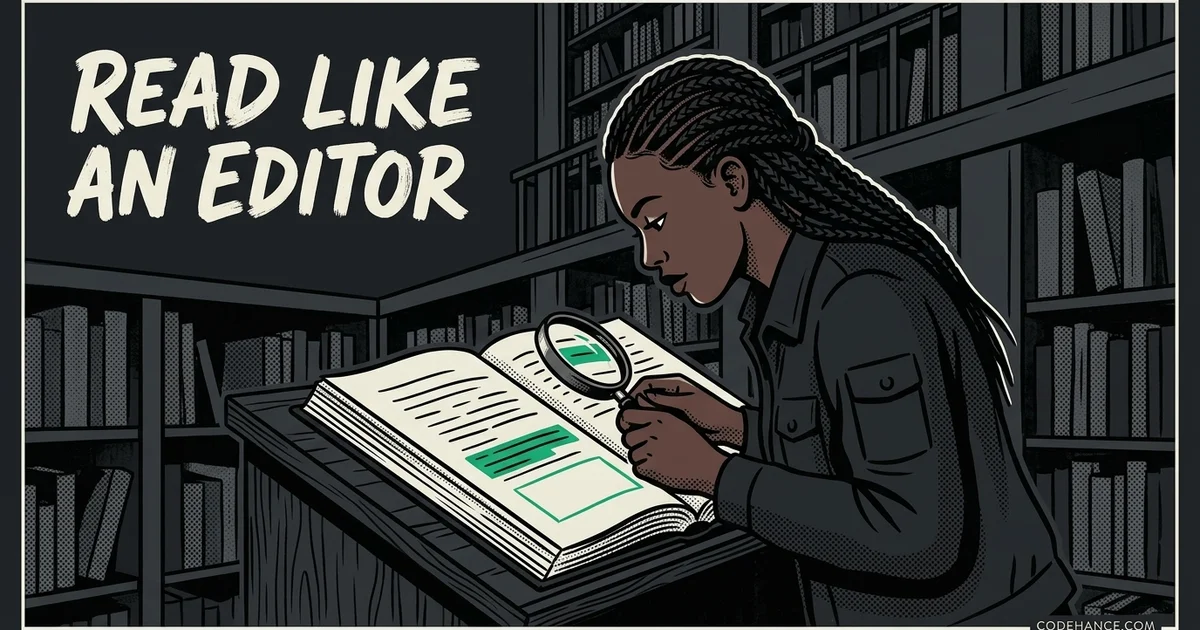
Modern dark-mode editorial screenprint illustration in deep zinc, off-white, and emerald green with   halftone textures and an editorial keyline border. In the upper left, bold hand-lettered text reads   'READ LIKE AN EDITOR'. In a grand archive lined with bookshelves, a Black female software engineer   with braided box braids leans over an open folio on a reading lectern. Holding a magnifying glass,   she inspects an emerald-highlighted citation footnote that reveals an empty void beneath, symbolizing   forensic fact-checking and provenance verification of AI-generated content. A subtle 'CODEHANCE.COM'   stamp marks the bottom right.
Using AI·1 September 2026

How to check AI output before you trust it

A better brief gets you a better draft. It does not tell you whether the draft is right. One in 277 peer-reviewed papers now cites work that was never written, and the checking nobody taught you is the part of the job that is left.

By Kingsley Ijomah

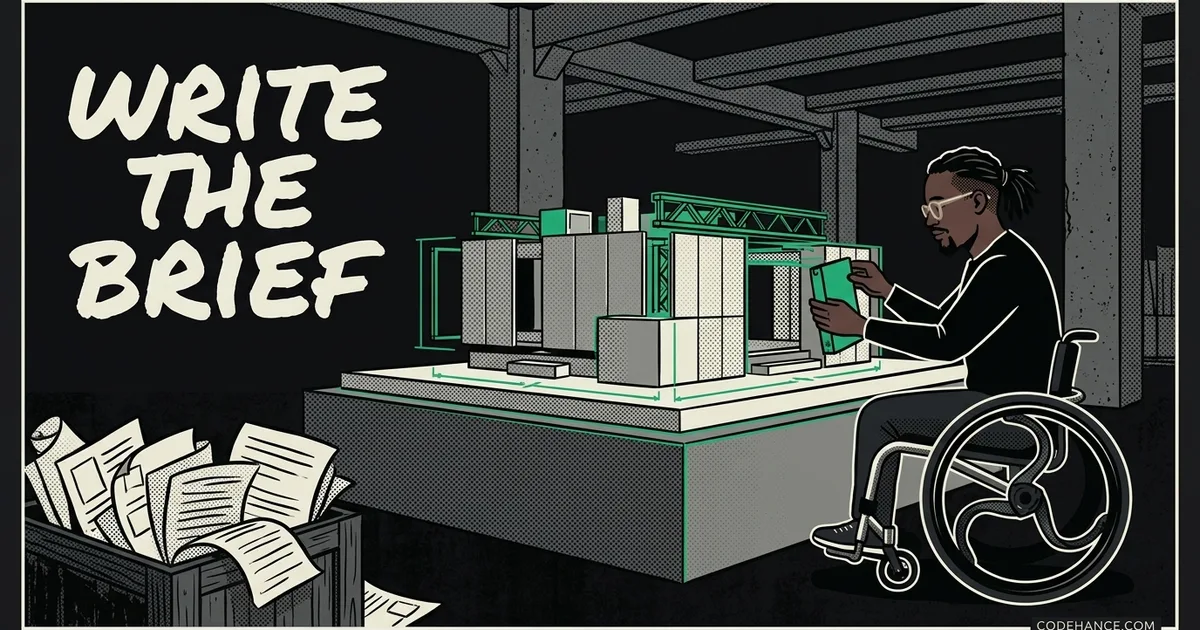
Modern dark-mode editorial screenprint illustration in deep zinc, off-white, and emerald green with   halftone textures and an editorial keyline border. In the upper left, bold hand-lettered text reads   'WRITE THE BRIEF'. A Black male software engineer with glasses and tied-back dreadlocks sits in an   active sports wheelchair with an ultra-low backrest and carbon Loopwheels in an architectural model   atelier. He constructs an interlocking geometric pavilion model on a central assembly plinth,   slotting a green structural truss into place while leaving an old crate of generic prompt folders   discarded on the floor, symbolizing prompting as disciplined modular specification rather than   boilerplate incantations. A subtle 'CODEHANCE.COM' stamp marks the bottom right.
Using AI·1 September 2026

How to ask AI better questions

Everyone has a folder of prompts copied from somewhere, and it never works as well as they expect. The problem is the folder. Prompting is specification, not incantation, and four habits cover almost all of it.

By Kingsley Ijomah

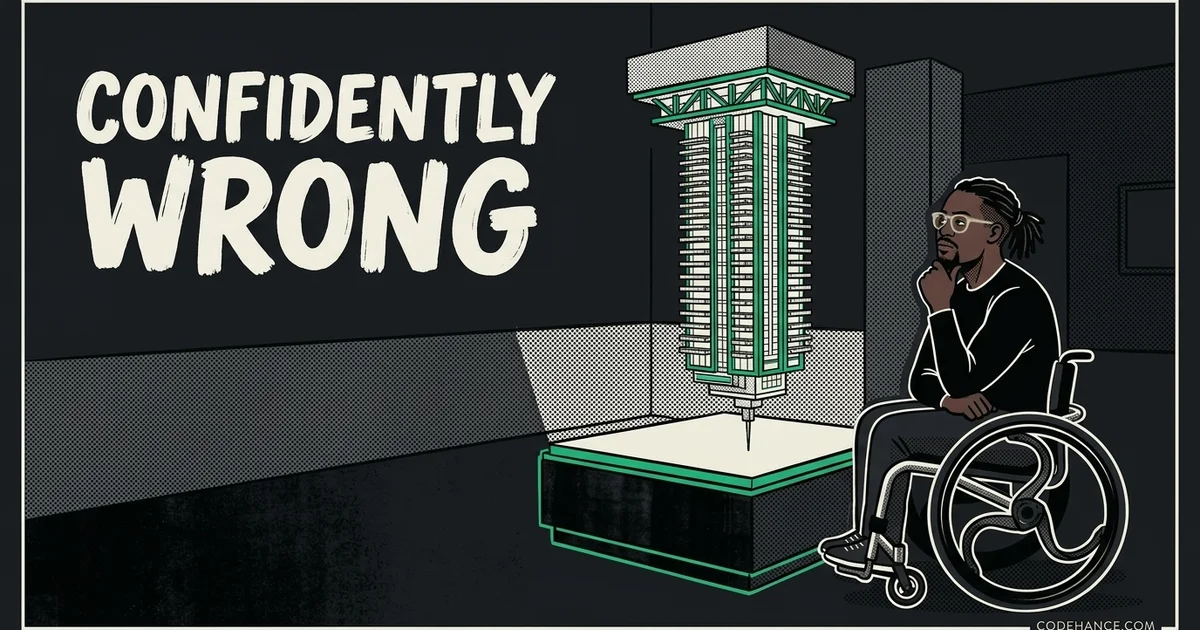
Modern dark-mode editorial screenprint illustration in deep zinc, off-white, and emerald green with   halftone textures and an editorial keyline border. In the upper left, bold hand-lettered text reads   'CONFIDENTLY WRONG'. A Black male software engineer with glasses and tied-back dreadlocks sits in an   active sports wheelchair with an ultra-low backrest and carbon Loopwheels beside a display plinth. He   looks with skeptical amusement at an immaculate modern skyscraper model that is proudly constructed   completely upside down, balancing on a single needle point, symbolizing AI output that looks   articulate and confident while being fundamentally wrong. A subtle 'CODEHANCE.COM' stamp marks the   bottom right.
Using AI·31 August 2026

Why AI sounds right when it is wrong

Something it produced read well, went into a report, and turned out to be invented. Five behaviours explain why, and not one is a bug waiting to be fixed.

By Kingsley Ijomah

Codehance emblemCODEHANCE

An open notebook from an AI Lead at Gravity9 on using AI, working with AI, and building AI.

The three layers

  • Using AI
  • Working with AI
  • Building AI

This blog

  • Latest notes
  • Complete archive
  • RSS feed
  • support@codehance.com

© 2026Codehance Ltd. All rights reserved. Registered in England & Wales. blog.codehance.com