CODEHANCEBlog
Browse allAbout

The complete archive

Every field note, in one place.

Browse the full journey, or choose a layer to narrow the conversation.

AllUsing AIWorking with AIBuilding AIFounder Notes
Evidence cards feed a small decision component that branches into retrieval, an answering model and human review.
Working with AI·7 October 2026

Jev, OpenAI, and the Shift Towards Decision AI

I started by asking what Jev actually built. A four-subagent RAG example brought the opportunity into focus: useful decisions need useful context and software that knows what to do next.

By Kingsley Ijomah
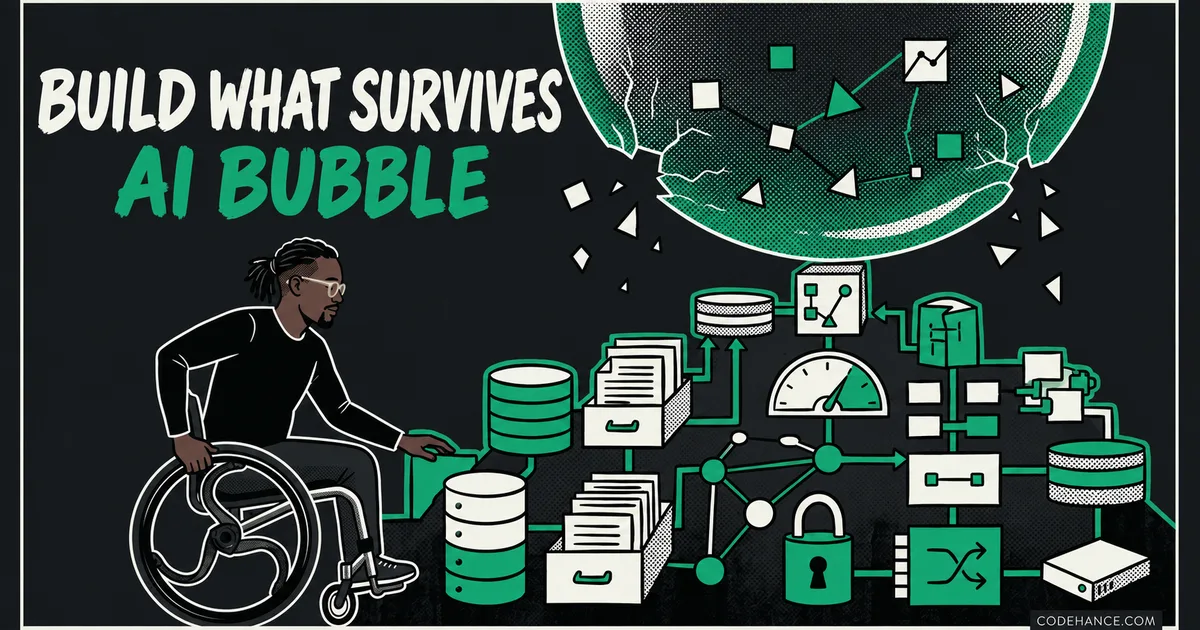
A fragile inflated sphere above a durable layered software foundation of data, retrieval, evaluation and connected tools
Working with AI·24 September 2026

When the AI Bubble Bursts, What Will Still Be Worth Learning?

The valuations attached to frontier-model companies will not rise forever. If they correct, the useful question for engineers is not whether AI disappears, but which parts of the stack remain worth understanding.

By Kingsley Ijomah

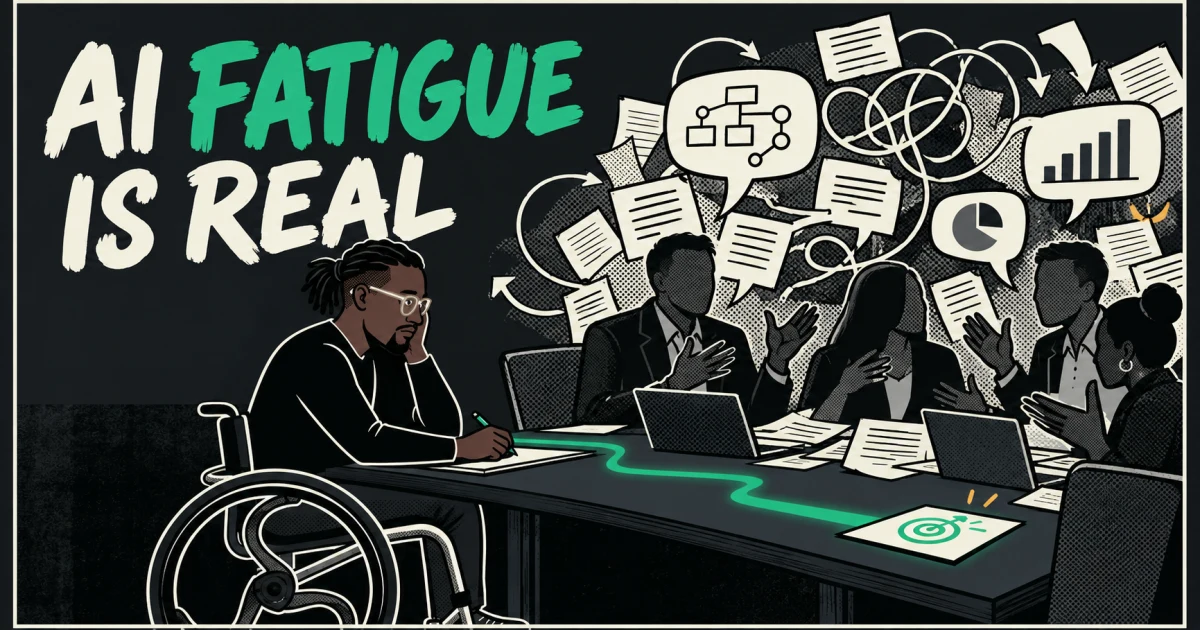
Four delivery professionals in a meeting turning a cloud of abstract AI symbols into one clear shared workflow
Using AI·22 September 2026

AI Fatigue Is Real and Workplace Jargon Is Making It Worse

I keep hearing the same reaction around AI-heavy meetings: people leave tired, confused and unsure what was decided. The problem is not simply new terminology. It is what happens when teams discuss an AI solution before agreeing on the business problem.

By Kingsley Ijomah

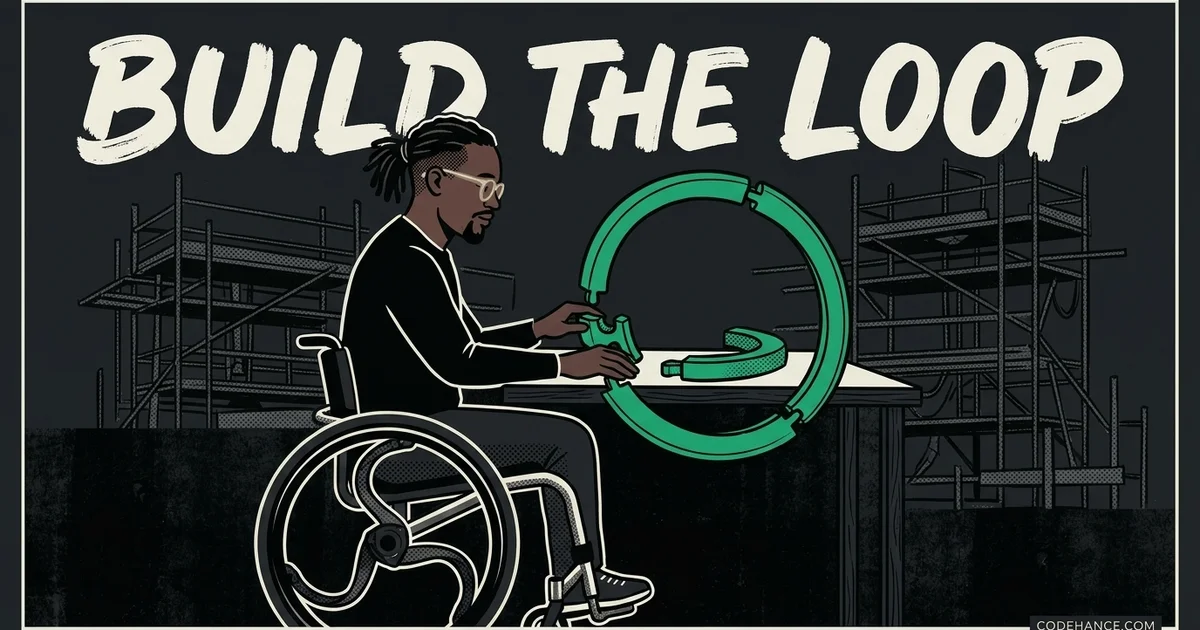
Editorial screenprint illustration of an engineer in an active sports wheelchair with Loopwheels assembling a minimal circular loop mechanism on a workbench in front of a sprawling scaffolding framework, featuring bold hand-drawn lettering reading 'BUILD THE LOOP' and subtle emerald accents.
Working with AI·17 September 2026

Build an AI Agent from First Principles Before You Choose a Framework

I kept rebuilding the same agent inside different products. Stripping it back to one definition, three skills, one MCP tool and a visible loop showed me what an agent framework actually does.

By Kingsley Ijomah

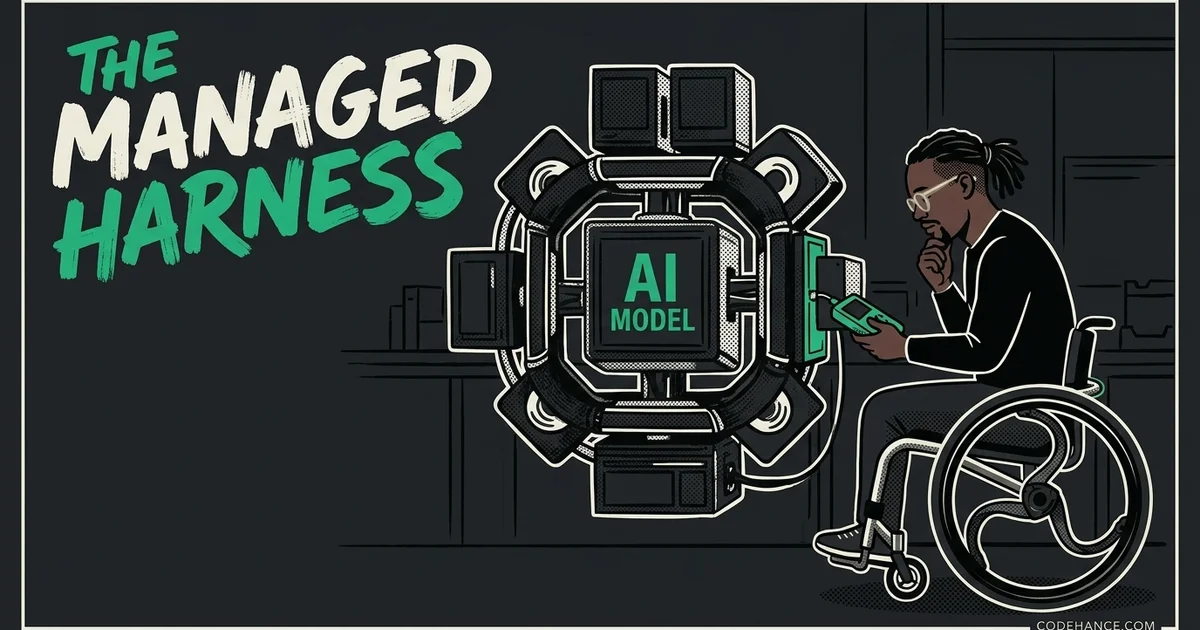
A software engineer examines a modular agent runtime passing through an API gateway into a managed sandbox.
Working with AI·17 September 2026

OpenAI’s Agents API: What It Is and What Changes for Developers

I first read ‘Agents API’ as another agent-building SDK. The important change is that OpenAI now operates the Codex harness itself, including durable sessions, context compaction, recovery, sandboxes and subagents. Here is what that means for developers.

By Kingsley Ijomah

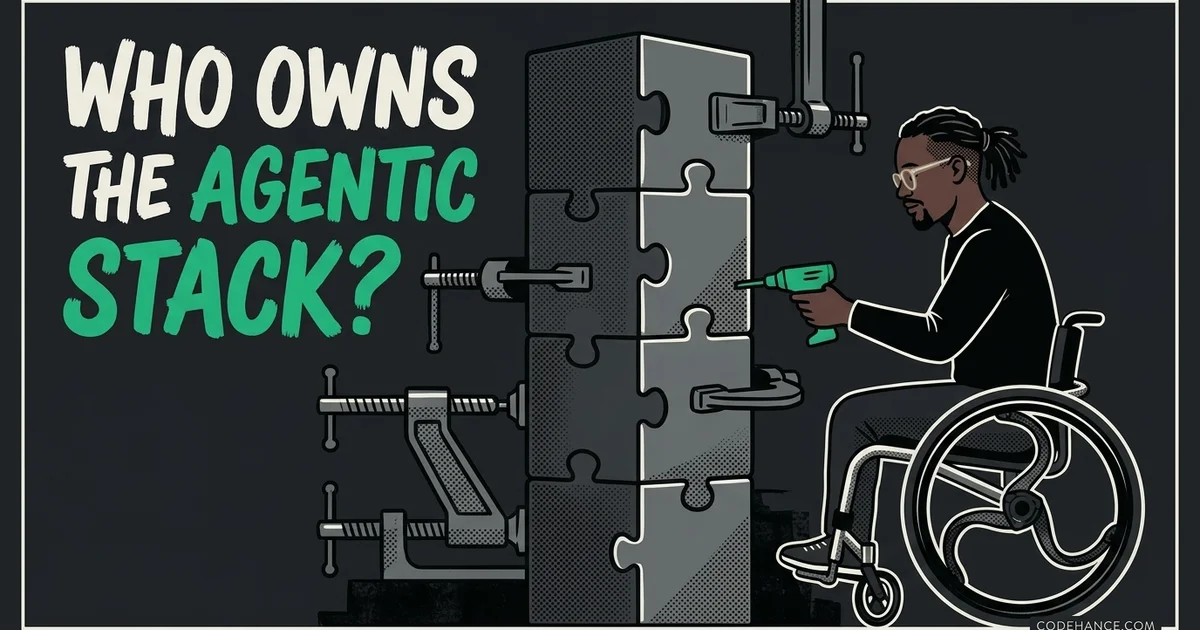
Editorial screenprint illustration featuring the bold hand-lettered headline 'CONTROL POINTS' in   crisp off-white brush lettering. A Black male software engineer with glasses and tied-back dreadlocks,   seated in an active sports wheelchair with Loopwheels, inspects a modular four-tier agentic stack with   an emerald green tool while industrial clamps latch onto separate layers.
Working with AI·17 September 2026

Who Will Own the Agentic Stack? The Model Is Only One Control Point

I started by comparing model providers, clouds, data platforms and agent frameworks as if they were fighting for the same prize. They are not. The more useful question is which control point each vendor wants to make hardest to replace.

By Kingsley Ijomah

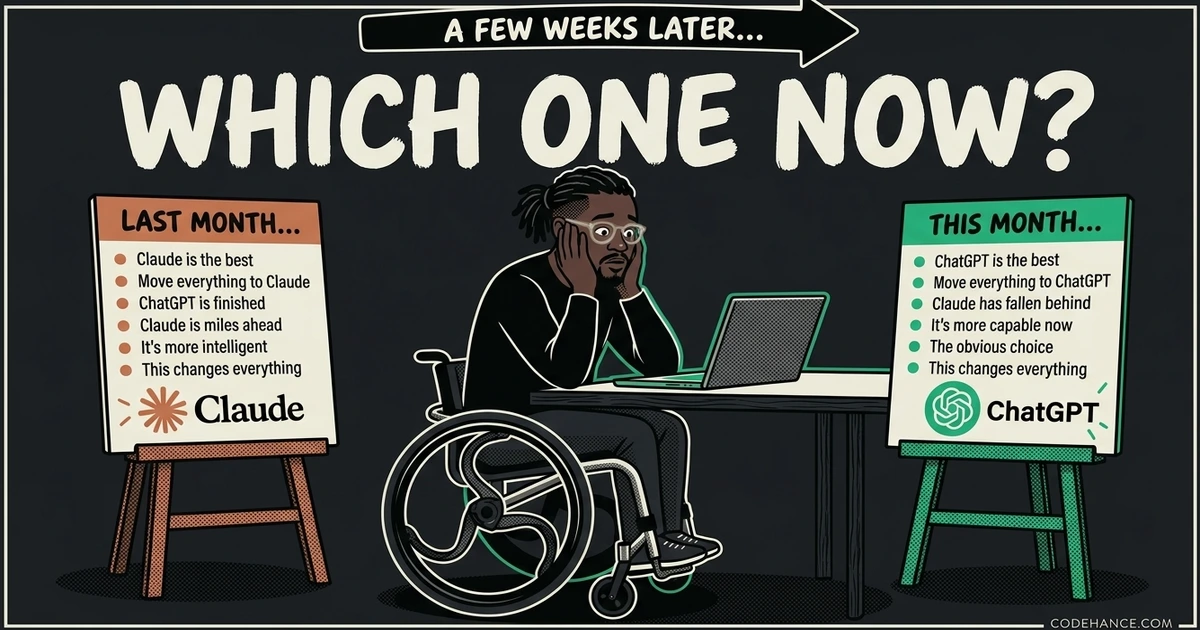
Modern tech editorial screenprint illustration with bold hand-lettered headline "WHICH ONE NOW?". The author, a Black male   software engineer with glasses and tied-back dreadlocks in an active sports wheelchair with Loopwheels, clutches his face in   humorous overwhelm between two architectural easels tracking the flip-flop between Claude and ChatGPT benchmark hype.
Using AI·12 September 2026

Your AI Workflow Should Be Model-Agnostic from Day One

I watched the confident advice swing from Claude to ChatGPT within weeks. It made me realise that the durable part of an AI workflow should be the context, process and checks you own, not whichever model happens to lead today.

By Kingsley Ijomah

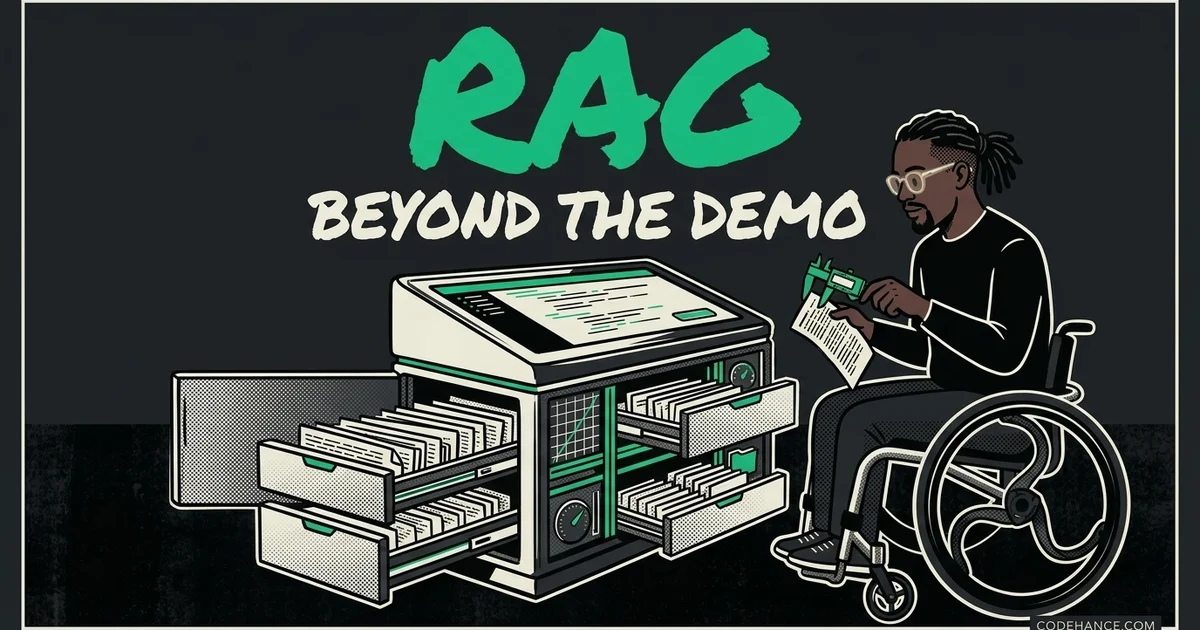
Modern tech editorial screenprint illustration with prominent bold hand-lettered headline   "RAG BEYOND THE DEMO". The author, a Black male software engineer with glasses and tied-   back dreadlocks in an active sports wheelchair with Loopwheels, uses precision calipers to   forensically inspect a text chunk from the opened internal machinery and index drawers   beneath a sleek software demo console.
Working with AI·12 September 2026

RAG Beyond the Demo: What Retrieval Is Really Doing

When I first looked beneath a working RAG demo, I learned that retrieval quality depended on much more than a vector database. I built this local, inspectable project so you can follow the same path through chunks, embeddings, conflicts, deletion and evaluation.

By Kingsley Ijomah

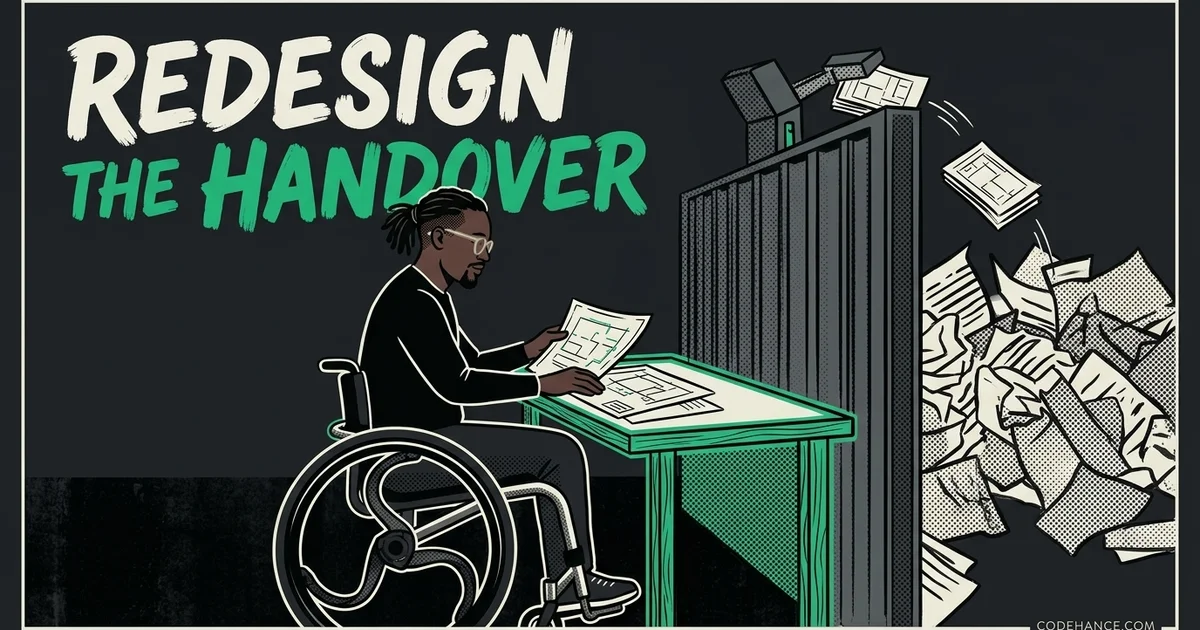
Cross-functional delivery specialists gathered around a shared workflow while AI-assisted knowledge moves between stages
Using AI·8 September 2026

AI Won’t Fix Agile Until You Redesign the Handover

AI can make every role faster while making delivery worse. The real opportunity is to turn specialist knowledge into reusable skills, redesign handovers and organise adoption around customer value.

By Kingsley Ijomah

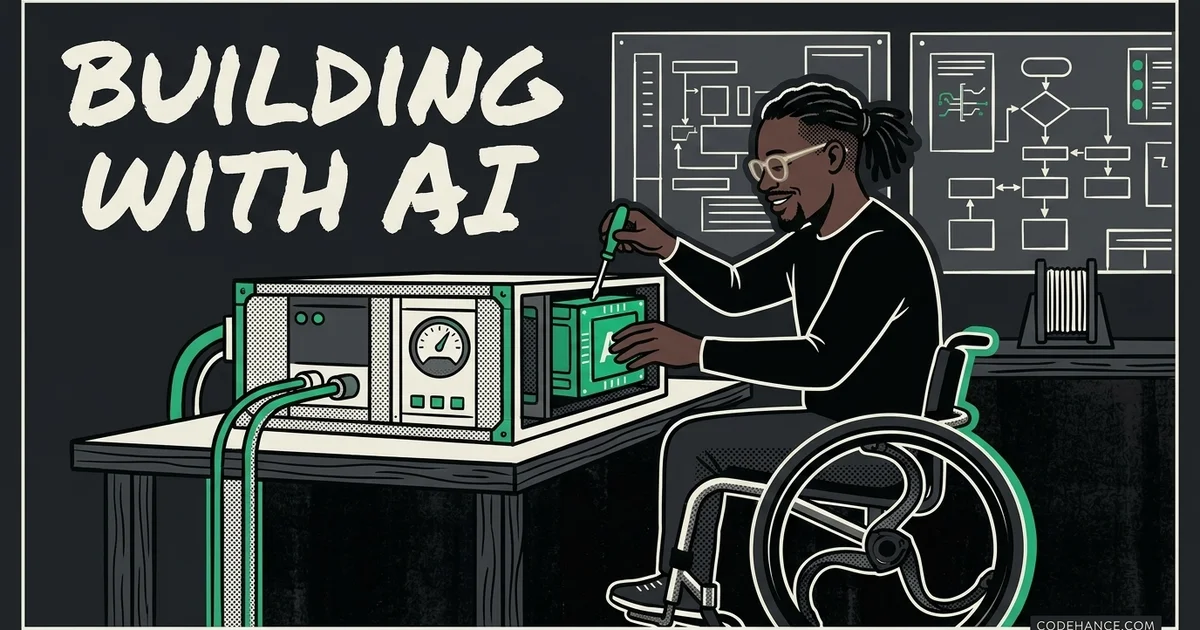
Modern tech editorial screenprint illustration featuring the bold hand-lettered headline 'BUILDING   WITH AI'. In an engineering systems workshop with architectural pipeline schematics and flowcharts on   the wall, a Black male software engineer with short locs tied back, rounded glasses, and a goatee   sits in a sleek active sports wheelchair with Loopwheels, using a precision tool to mount and   calibrate a glowing emerald green modular AI core component into a robust system chassis equipped   with an evaluation meter and safe-boundary conduits. Deep dark zinc background with Ben-Day halftone   shading, vivid emerald accents, an inner keyline frame, and a discreet 'CODEHANCE.COM' stamp in the   lower right.
Working with AI·6 September 2026

What Building with AI Actually Means for Software Engineers

I understood building with AI more clearly when a trend-detection project stopped being an LLM problem and became a system-design problem involving embeddings, time, evaluation, incomplete data and human judgement.

By Kingsley Ijomah

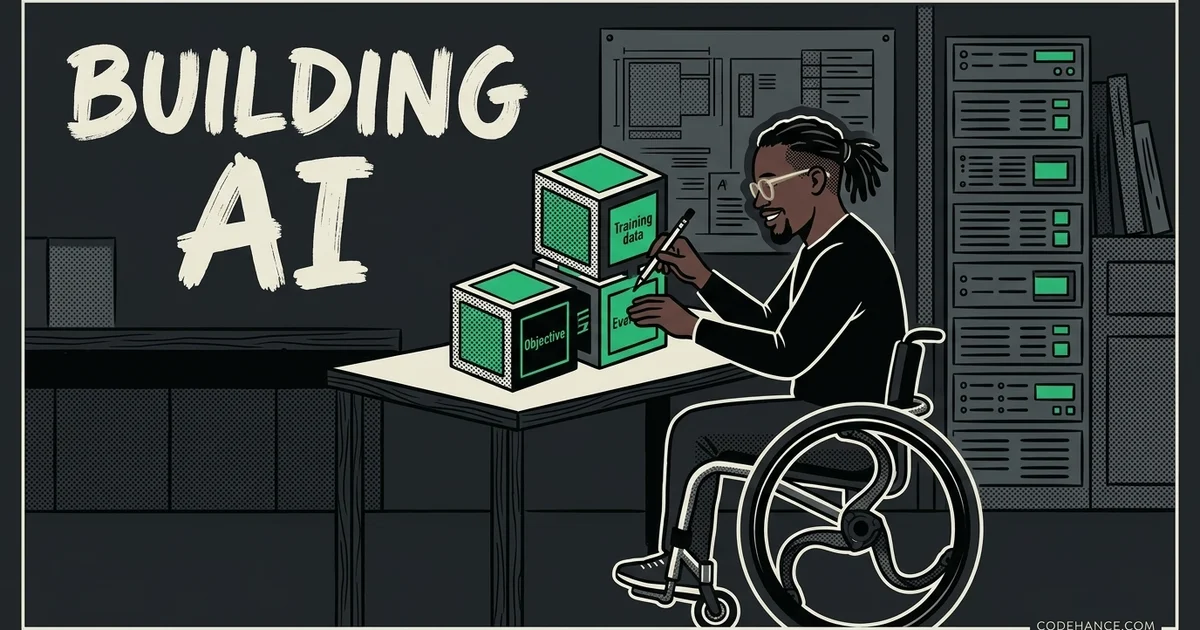
Modern tech editorial screenprint illustration with the bold hand-lettered headline 'BUILDING AI'.   In a workshop flanked by server racks and architecture blueprints, a Black male software engineer   with short locs tied back, rounded glasses, and a goatee sits in a sleek active sports wheelchair   with Loopwheels, calibrating the modular emerald green core blocks of a machine learning system   labeled 'Training data', 'Objective', and 'Evaluation'. Deep zinc background with Ben-Day halftone   shading, vivid emerald accents, an inner keyline framing border, and a discreet 'CODEHANCE.COM' stamp   in the lower right.
Building AI·6 September 2026

What Building AI Means: My First Step as a Full-Stack Developer

My first useful step into Building AI as a full-stack developer was not training a model. It was understanding what changes when software learns behaviour from data rather than following rules written by hand.

By Kingsley Ijomah

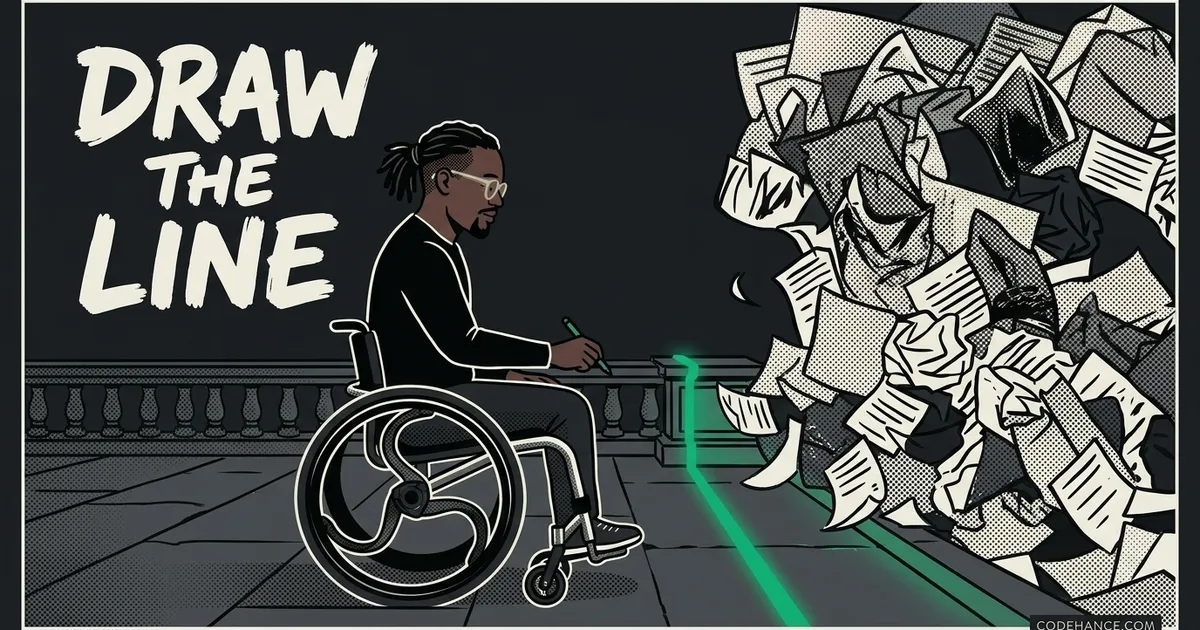
Modern dark-mode editorial screenprint illustration in deep zinc, off-white, and emerald green with   halftone textures and an editorial keyline border. In the upper left, bold hand-lettered text reads   'DRAW THE LINE'. A Black male software engineer with glasses and tied-back dreadlocks sits in an   active sports wheelchair with an ultra-low backrest and carbon Loopwheels on a stone terrace. With   marker in hand, he stands guard behind a glowing emerald green boundary line that stops an avalanche   of chaotic loose paperwork in its tracks, symbolizing deliberate boundaries, governance, and   accountability in AI adoption. A subtle 'CODEHANCE.COM' stamp marks the bottom right.
Using AI·1 September 2026

When not to use AI

Everybody asks what they should use AI for. Almost nobody asks what they should not, because nobody selling it is incentivised to answer. The work it is worst at, why you cannot feel the difference, and what must never go in at all.

By Kingsley Ijomah

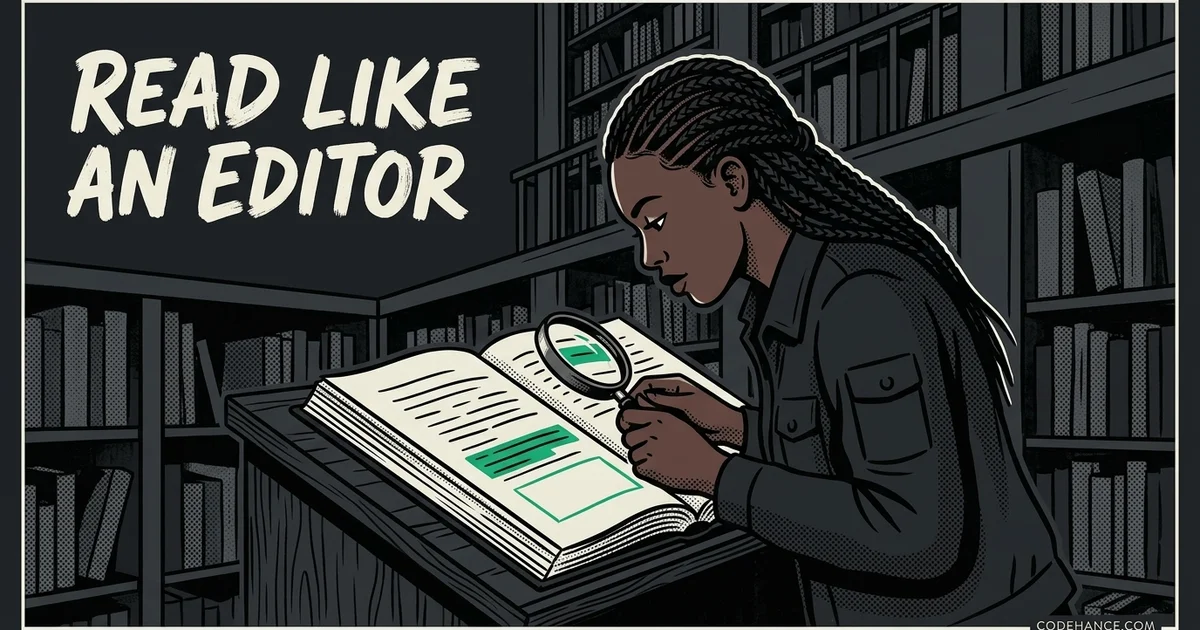
Modern dark-mode editorial screenprint illustration in deep zinc, off-white, and emerald green with   halftone textures and an editorial keyline border. In the upper left, bold hand-lettered text reads   'READ LIKE AN EDITOR'. In a grand archive lined with bookshelves, a Black female software engineer   with braided box braids leans over an open folio on a reading lectern. Holding a magnifying glass,   she inspects an emerald-highlighted citation footnote that reveals an empty void beneath, symbolizing   forensic fact-checking and provenance verification of AI-generated content. A subtle 'CODEHANCE.COM'   stamp marks the bottom right.
Using AI·1 September 2026

How to check AI output before you trust it

A better brief gets you a better draft. It does not tell you whether the draft is right. One in 277 peer-reviewed papers now cites work that was never written, and the checking nobody taught you is the part of the job that is left.

By Kingsley Ijomah

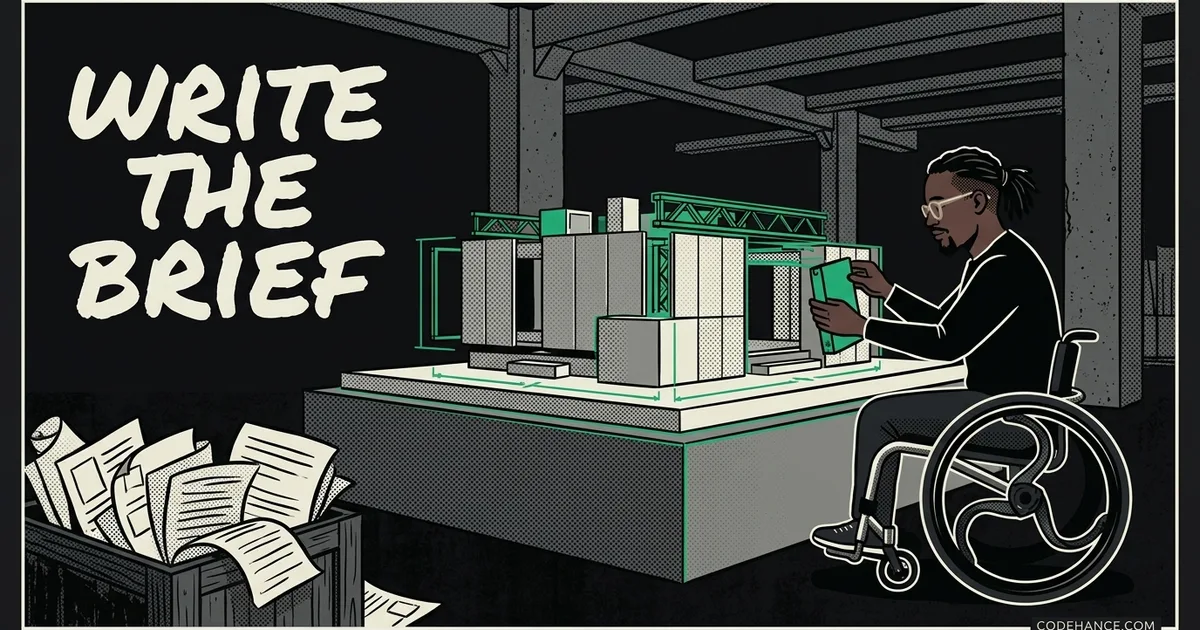
Modern dark-mode editorial screenprint illustration in deep zinc, off-white, and emerald green with   halftone textures and an editorial keyline border. In the upper left, bold hand-lettered text reads   'WRITE THE BRIEF'. A Black male software engineer with glasses and tied-back dreadlocks sits in an   active sports wheelchair with an ultra-low backrest and carbon Loopwheels in an architectural model   atelier. He constructs an interlocking geometric pavilion model on a central assembly plinth,   slotting a green structural truss into place while leaving an old crate of generic prompt folders   discarded on the floor, symbolizing prompting as disciplined modular specification rather than   boilerplate incantations. A subtle 'CODEHANCE.COM' stamp marks the bottom right.
Using AI·1 September 2026

How to ask AI better questions

Everyone has a folder of prompts copied from somewhere, and it never works as well as they expect. The problem is the folder. Prompting is specification, not incantation, and four habits cover almost all of it.

By Kingsley Ijomah

Modern dark-mode editorial screenprint illustration in deep zinc, off-white, and emerald green with   halftone textures and an editorial keyline border. In the upper left, bold hand-lettered text reads   'CONFIDENTLY WRONG'. A Black male software engineer with glasses and tied-back dreadlocks sits in an   active sports wheelchair with an ultra-low backrest and carbon Loopwheels beside a display plinth. He   looks with skeptical amusement at an immaculate modern skyscraper model that is proudly constructed   completely upside down, balancing on a single needle point, symbolizing AI output that looks   articulate and confident while being fundamentally wrong. A subtle 'CODEHANCE.COM' stamp marks the   bottom right.
Using AI·31 August 2026

Why AI sounds right when it is wrong

Something it produced read well, went into a report, and turned out to be invented. Five behaviours explain why, and not one is a bug waiting to be fixed.

By Kingsley Ijomah

The three layers of AI
Founder Notes·30 August 2026

The three layers of AI

My brother, who has never written a line of code, and a software engineer with years behind him asked me the same question in the same month: I want to get into AI, where exactly do I start? There are three answers, they are different jobs, and the order you take them in matters.

By Kingsley Ijomah

Codehance emblemCODEHANCE

An open notebook from an AI Lead at Gravity9 on using AI, working with AI, and building AI.

The three layers

  • Using AI
  • Working with AI
  • Building AI

This blog

  • Latest notes
  • Complete archive
  • RSS feed
  • support@codehance.com

© 2026Codehance Ltd. All rights reserved. Registered in England & Wales. blog.codehance.com